 English
 Español
 عربى
 Deutsch


Best Affordable Hair Clipper: What Decides Value in Blade, Motor and Price
 2026.10.29
 Industry News
Content
A shop reorders clippers every six months. A household buys one and uses it eight times a decade. Both pay the same amount at checkout, and only one of them gets a fair deal.
The conclusion first: the best affordable hair clipper is not the lowest-priced model on the page. It is the unit with the lowest cost per cutting hour, and three parts decide that number, the motor, the blade steel and whether replacement blades are still available in year five. Housing color, box contents and the count of plastic guards barely move it.
Where the Money Goes in an Affordable Clipper
Retail pricing in this category settles into three bands, and the bands are defined less by features than by which parts the factory was willing to fund.
- Entry band, about 20 to 40 US dollars: sealed battery, steel blade with no grade declared, plastic gear train, single molded housing.
- Mid band, about 40 to 90 US dollars: replaceable cell or a corded option, named steel grade, metal blade carrier, taper lever with usable travel.
- Professional band, about 90 to 150 US dollars: high-torque motor, coated blade set sold later as a spare part, metal chassis or counterweighted body.
The blade assembly and the battery pack are normally the two most expensive sub-assemblies in a cordless clipper. That is exactly why a low-cost design attacks them first, and exactly why a buyer should inspect them first.
Four Specifications That Decide Value
Ignore the marketing names and read four lines on the spec sheet. If a supplier cannot answer all four in writing, the unit is a gamble regardless of the price tag.
| Specification | Typical bargain value | Value-buy threshold | Why it matters |
|---|---|---|---|
| Motor speed under load | 4,500 to 5,500 RPM free-running, dropping sharply in thick hair | 7,000 RPM or more with load figures published; one barber model in the Jiaweidi catalog is rated at 8,000 RPM | Blade speed through the hair controls snagging, heat and total cutting time |
| Blade steel grade | Stainless steel, grade not stated | 3Cr13 (about 0.26 to 0.35 percent carbon) or 420J2 (about 0.16 to 0.25 percent carbon), grade named on paper | More carbon holds an edge longer, but only if hardening is controlled |
| Blade coating | Bare polished steel | Black titanium or ceramic layer on the moving blade | Lower friction means less skin heat and slower edge wear |
| Spare part supply | Blade not sold separately, no part number | Blade listed as a separate item with a part number and a stable price | A 15 dollar blade rescues a 60 dollar clipper instead of scrapping it |
Blade Steel Separates Bargain From Affordable
Steel grade is the quietest line on the page and the first one to show up in daily use. In the GB/T 20878 designation system, 3Cr13 carries roughly 0.26 to 0.35 percent carbon with 12 to 14 percent chromium, while 420J2 sits near 0.16 to 0.25 percent carbon across the same chromium range. More carbon means the edge resists dulling for longer, but it also means hardening and tempering have to be controlled, otherwise the blade turns brittle and chips on a thick patch of hair.
Coating is a separate decision. A black titanium or ceramic layer on the moving blade lowers friction against the cutting comb, which keeps the blade cooler on the skin and slows edge wear. On a home unit that sees ten haircuts a year, coating is a comfort upgrade. In a shop that runs the clipper for hours, it is a maintenance interval.
Blade alignment deserves the same scrutiny. Two pieces of good steel that are ground and set a few hundredths of a millimeter apart will pull hair instead of cutting it, so ask how the factory checks comb-to-blade alignment after assembly.
Power Supply Choices and Their Real Cost
Corded clippers rarely fail for electrical reasons. Cordless ones rarely fail for any other reason. Standard lithium-ion cells are usually rated at 300 to 500 full charge cycles before usable capacity falls to about 80 percent, according to typical 18650 cell datasheets, so a daily shop user reaches that limit inside two years while a household user never approaches it.
That single fact reorganizes the purchase. For heavy use, either buy a corded model, or buy a cordless one with a replaceable cell and a corded fallback. A sealed battery inside a professional setting turns a 60 dollar clipper into a disposable item.
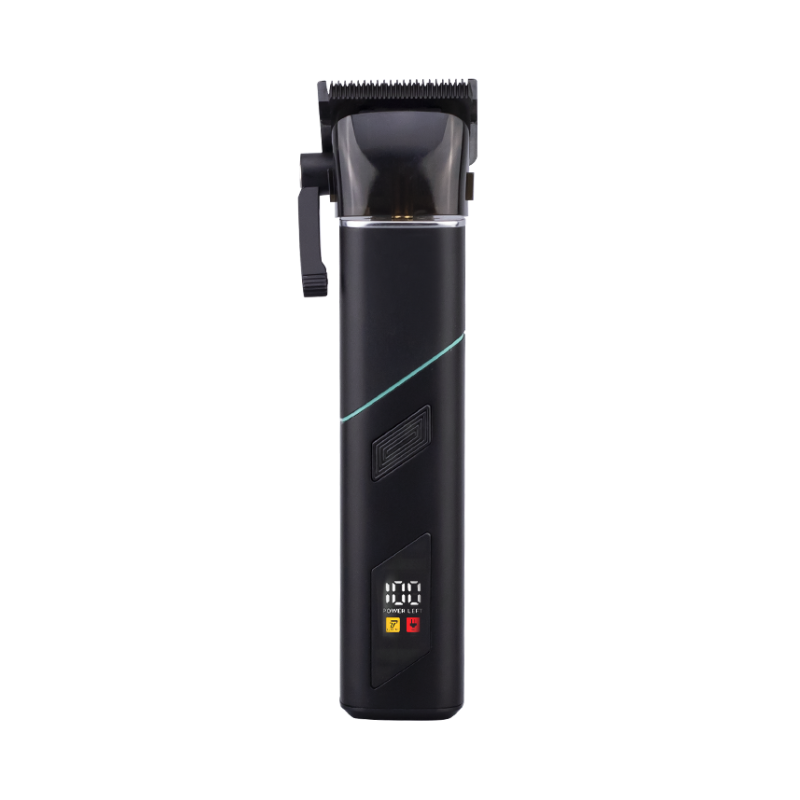 Ceramic Blade Electric Clipper Set with Digital DisplayFor readers weighing cordless options, this set pairs a 7000 rpm ceramic blade with eight guards, a digital display, and Type-C charging with use-while-charging.View Product →
Runtime claims deserve one more question: measured minutes at what load? A clipper running free in a test rig will always beat the same unit trimming a full head of thick hair, so the useful figure is the one recorded while cutting.
Buying for a Shop Versus Buying for a Household
The same specification list produces different answers depending on who holds the clipper.
Inside a barbershop
Priority order: torque under load, heat buildup across a 20 minute continuous run, blade alignment after repeated drops, and the price of the spare blade set. Speed matters more than battery capacity, because the tool lives on a cord or a charging stand. A barber who swaps blades twice a year on a mid-priced unit usually spends less than one who replaces a cheap unit twice a year.
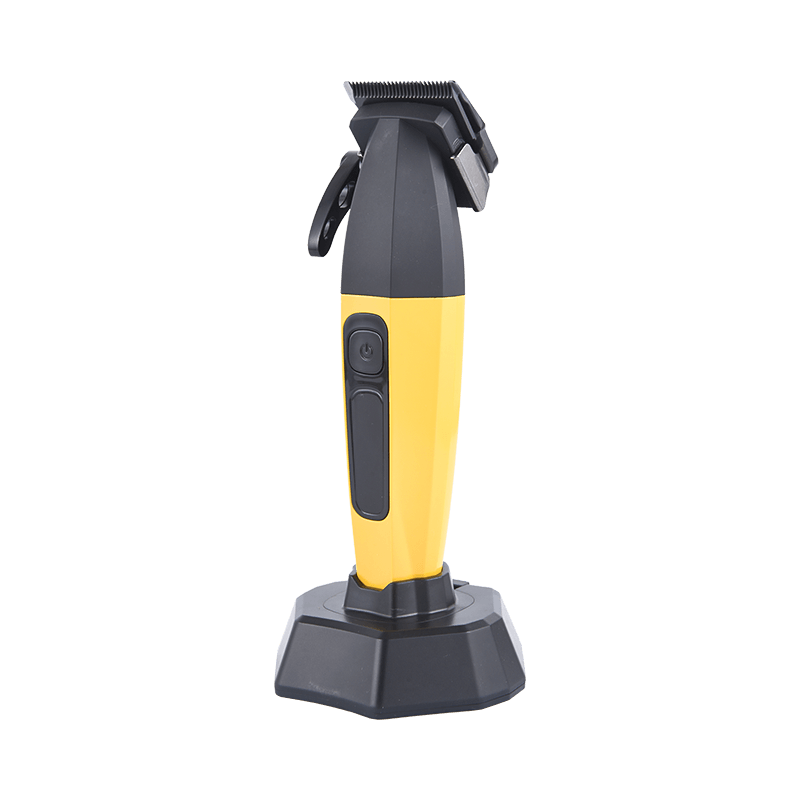 8000 RPM Professional Hair Clipper with Charging BaseThis professional clipper pairs an 8000 rpm motor and ceramic titanium blades with a 2500mAh battery, digital display, and charging base for shop or home.View Product →
In a household
Priority order: guard range for different hair lengths, weight in the hand, noise level for nervous children, and cleaning time. A 5,000 RPM motor with a sharp, well-aligned blade cuts a family haircut perfectly well, and extra speed buys nothing at home. What does matter is whether the blade detaches and rinses in a few seconds, because a clogged blade pulls hair and ruins the whole experience.
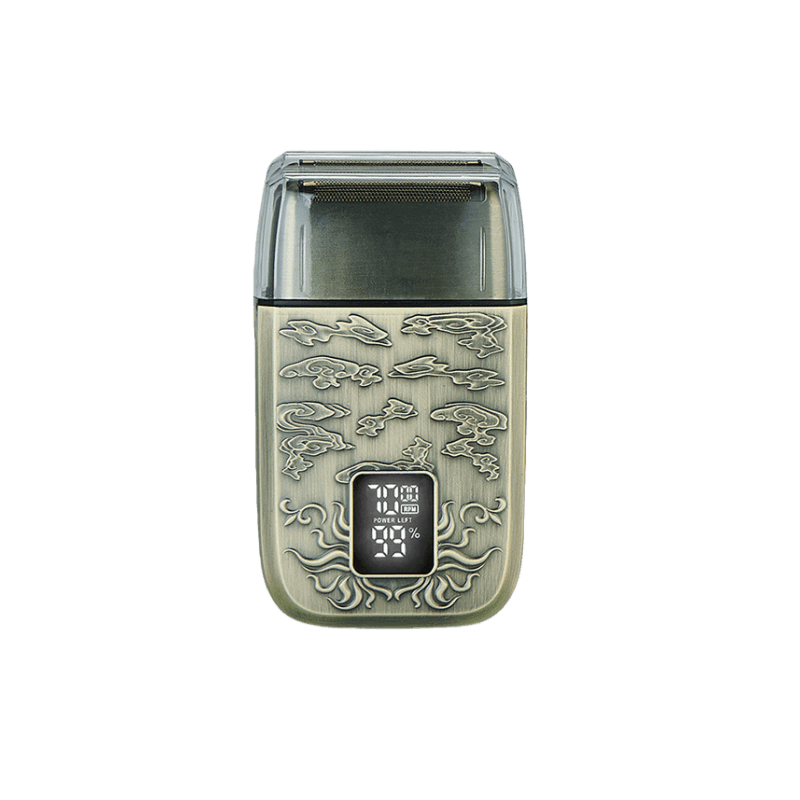 Double-Blade Mesh Beard Trimmer with LCD DisplayFor travel or gifting, this trimmer combines a floating double-blade mesh, three speeds, bronze alloy body, LCD, and USB charging with 180-minute runtime.View Product →
A Checklist to Send to Any Supplier
Wholesale buyers carry an extra risk: a model that performs well as a sample may arrive with a different blade two shipments later. Five questions close most of that gap.
- Which steel grade is the fixed blade, which is the moving blade, and can the mill certificate be shared?
- What is the motor speed at load rather than free-running, and how does it behave in wet or dense hair?
- Is the blade sold as a separate part, with a part number and a price that stays stable between orders?
- Is the battery replaceable, and which cell format is used?
- What does the warranty cover, and what is the process for a batch with misaligned blades?
Manufacturing capability is worth verifying alongside the answers, since blade geometry depends on tooling and assembly discipline more than on the spec sheet. Jiaweidi Electric runs automated injection molding, assembly and packaging lines in Ningbo, has committed 50 million RMB to a new plant, and projects 80 million RMB in annual output once it is complete (company figures, 2025). Buyers can review the production floor and workshop layout before requesting samples.
The Bottom Line
An affordable hair clipper is one you can still buy blades for in year five. Check the steel grade, ask for load speed instead of free speed, confirm the battery is replaceable, and price the spare blade before comparing two units side by side. Do that, and the cheaper-looking option usually stops looking cheap. For bulk orders or model-specific questions, the team can be reached through the contact page.
- ADD: Room 301, Building 5, Xiaocao'e (Hangzhou Bay) Electromechanical Industrial Park, Yuyao City
- Tel:+86 13805803689 / +86 13805803356
- Email: 269354157@qq.com
Copyright Ningbo Jiaweidi Electric Appliance Co., Ltd. All Rights Reserved.
OEM/ODM personal electric hair push manufacturer
Custom Electric Push Shear Carving Push Factory
