 English
 Español
 عربى
 Deutsch


Barbers Professional Hair Clippers: Buying Guide for Shops and Distributors
 2026.10.23
 Industry News
Content
- 1 The Specifications That Decide a Clipper's Working Day
- 2 Motor Speed, Torque, and Why No-Load RPM Is Misleading
- 3 Blade Steel, Coating, and Edge Retention
- 4 Carving and Line Work: The Case for a Second Clipper
- 5 Corded or Cordless in a Working Shop
- 6 A Pre-Order Checklist for Wholesalers and Distributors
- 7 What Jiaweidi Builds and How the Factory Is Set Up
A barber feels it about four clients into the morning. The clipper that glided through the first two fades starts dragging, the blade head is warm against the wrist, and the taper needs a second pass before it looks right. Nothing on the label has changed. What changed is that the motor is now pushing through thicker hair with a blade that has already given up part of its edge geometry.
That is the real dividing line between consumer clippers and barbers professional hair clippers. For a working shop, the specification that matters is not the wattage on the box. It is torque under load, blade steel and coating, heat path through the head, and blade gap tolerance. Get those four right and the tool holds its cut from the first client to the last. Get them wrong and the clipper costs more in wasted chair time than it saved at purchase.
The sections below explain each factor, what the numbers actually mean on the floor, and how to verify a batch before committing to a wholesale order.
The Specifications That Decide a Clipper's Working Day
The gap between a supermarket clipper and a barber-grade tool is measurable rather than marketing language. Comparing typical published specifications side by side makes the difference clear.
| Specification | Consumer-grade clipper | Barber-grade clipper |
|---|---|---|
| Motor speed | 5,000 to 6,000 RPM, measured with no load | 7,000 to 8,000 RPM or higher, held under cutting load |
| Blade steel | Coated carbon steel, often unmarked | 3Cr13 or 420J2 stainless with black titanium or ceramic treatment |
| Blade gap | Fixed, wide tolerance | Adjustable lever, tighter tolerance for fading and blending |
| Heat management | Housing warms within minutes | Balanced head geometry, low-friction coating, cooler running blade |
| Runtime | 45 to 60 minutes | 120 to 180 minutes cordless, or continuous corded operation |
| Spare parts | Rarely supported after purchase | Replacement blades, guide combs and batteries available separately |
The pattern is consistent. Professional tools are not simply faster. They are built so that speed, edge condition and heat stay inside a usable range for a full shift, and so that worn parts can be replaced instead of forcing a new purchase.
Motor Speed, Torque, and Why No-Load RPM Is Misleading
A no-load RPM figure describes the blade when there is nothing in it. It says nothing about what happens when a barber pushes through a dense, damp crown. Two clippers both rated at 8,000 RPM can behave completely differently: one holds its speed, the other drops sharply and starts pulling hair instead of cutting it.
Two factors drive that behaviour. The first is motor type. Rotary motors with a fixed magnet and a direct blade connection lose less speed under load than pivot motors that rely on a spring and an electromagnet. That is why rotary designs dominate high-output professional models. The second is the drive train and blade fit. A blade that is slightly out of alignment adds friction, and friction is what turns motor speed into heat rather than cutting force.
Speed also carries a cost. Every additional 1,000 RPM adds vibration, and vibration travels into the hand, the blade and the client's scalp. In a shop where four barbers work side by side for eight hours, a loud, high-vibration clipper becomes a fatigue issue rather than a comfort preference.
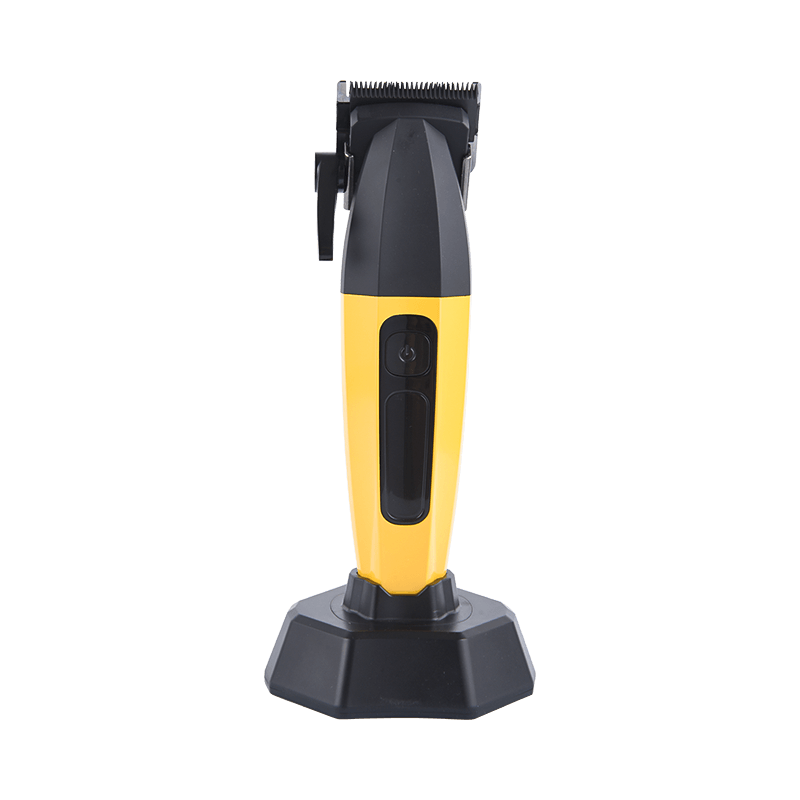
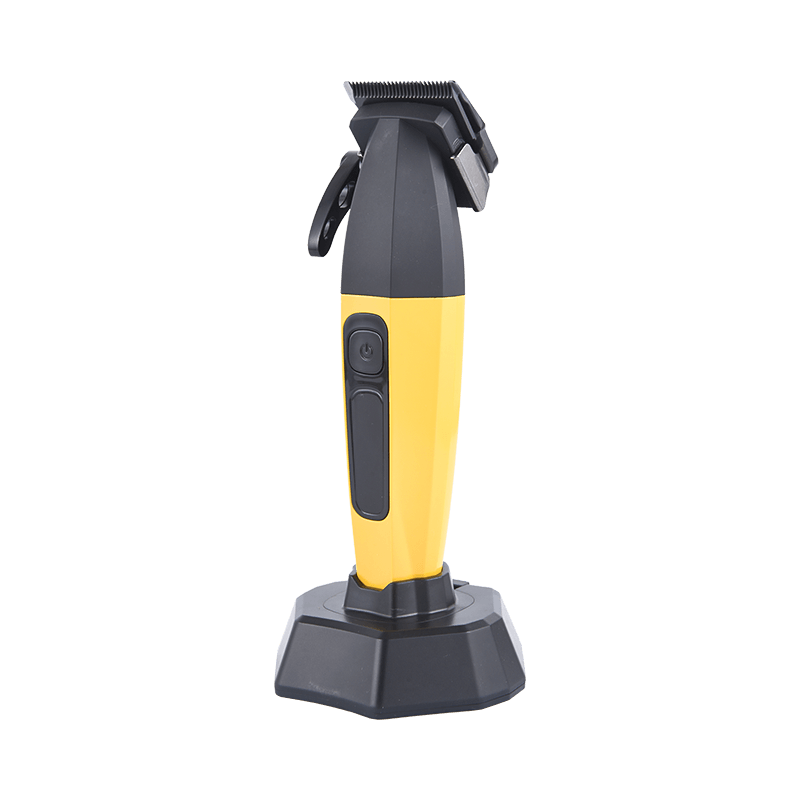 8000 RPM Professional Hair Clipper for BarbersA high-output barber clipper with an 8000 rpm motor, 2500mAh battery, and ceramic black titanium blades for bulk removal and long shop days.View Product →
For bulk removal, a high-output unit is the right tool. For detail work and finishing, a lower-vibration model at moderate speed usually produces a cleaner result, because control matters more than raw blade speed once the hair is short.
Blade Steel, Coating, and Edge Retention
Blade material decides how long the cutting edge survives repeated contact with hair, scalp and cleaning brushes. Two steels appear most often in professional clipper heads: 3Cr13 stainless and 420J2 stainless. Both are martensitic stainless grades, and published steel datasheets place them in roughly the 50 to 56 HRC range after heat treatment.
The practical difference is edge stability against corrosion resistance. 3Cr13 carries more carbon, so it holds a keener edge for longer under continuous cutting. 420J2 is easier to grind and more corrosion resistant, which matters in humid shops and after wet cleaning. Neither is wrong. The choice depends on whether the priority is edge life or maintenance tolerance.
Surface treatment often matters more than the base grade. PVD black titanium coating, a titanium-based nitride layer, is commonly published at surface hardness in the 2,000 to 2,500 HV range, against roughly 600 HV for uncoated stainless. That difference reduces friction along the contact face where the moving blade slides across the fixed blade, which is the single most common point of wear on any clipper. Ceramic moving blades take a different route: zirconia ceramic runs cooler and does not corrode, but it is brittle, so it is normally paired with a steel fixed blade.
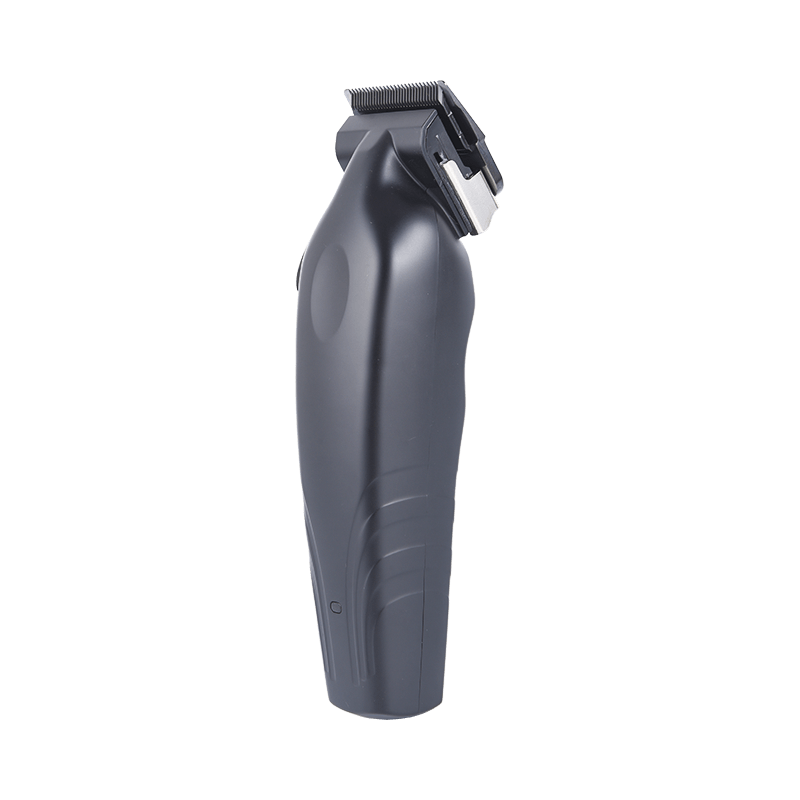 Black Titanium Blade Professional Electric Hair ClipperA 7000 rpm clipper with black titanium-coated steel blades, 2500mAh battery, and USB-C charging, suited to shops weighing blade wear and daily use.View Product →
For a shop cutting twenty or more heads a day, a coated stainless blade set is usually the more economical choice over a two to three year horizon, because blade replacement cost is spread across a longer interval.
Carving and Line Work: The Case for a Second Clipper
A standard clipper blade cannot produce a sharp outline. The gap between the fixed and moving blade is too wide and the tooth pitch is too coarse, so the cut fades out instead of stopping cleanly. Carving clippers and detail trimmers solve this with a much tighter blade gap, typically in the 0.1 to 0.5 mm range depending on the model, and a narrower tooth profile that lets the barber place a line where it belongs.
This is why a barber's station usually holds two or three cutting tools rather than one. Bulk removal, fading and outlining put different demands on a blade, and a single tool optimised for one job will always compromise the others. Buyers who understand how a carving hair clipper works tend to order in sets rather than singles, because the shop floor genuinely needs the combination.
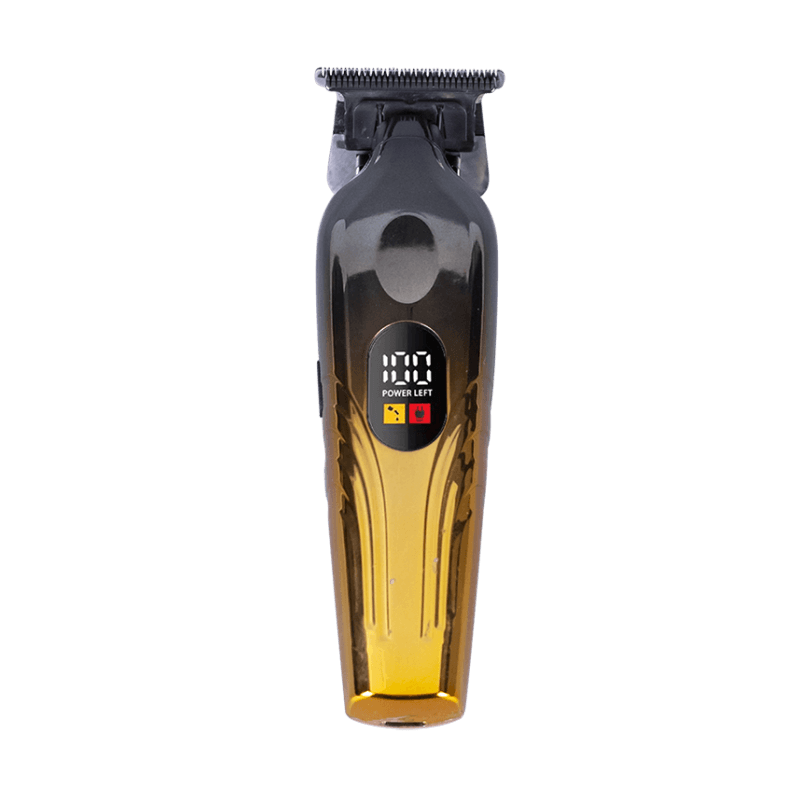 LED Multi-Functional Hair Clipper for CarvingA lightweight 6800 rpm carving clipper with ceramic 0.1mm tooth pitch, LED display, and 180-minute runtime for detailed outlining and versatile barber station use.View Product →
When specifying a carving unit for shop use, the questions to ask are the blade gap in millimetres, the tooth count, whether the blade is replaceable, and whether the housing can survive being dropped on a tiled floor. All four affect how the tool performs after six months of daily use, which is the period that matters commercially.
Corded or Cordless in a Working Shop
Cordless has become the default for most chairs, and the reason is practical rather than fashionable. A cord across the client's shoulder is a hygiene and safety problem. Lithium cells now deliver two to three hours of continuous cutting, which covers a full day for most barbers if the tool returns to its stand between clients.
What buyers should confirm is whether the battery is replaceable, how the clipper behaves as charge falls, and how long the unit takes to reach full charge. Some cordless models lose blade speed in the final portion of the charge, and that shows immediately in the cut. Others hold constant output until the cell is nearly empty, which is a much better fit for professional use.
The reliable arrangement for a shop is a mix. Cordless units handle the floor, while one corded machine stays available as a backup and for extended bulk sessions. In a wholesale order, that combination also protects the retailer, because a shop that runs out of charge mid-appointment will not blame the battery alone.
A Pre-Order Checklist for Wholesalers and Distributors
Volume purchasing turns small manufacturing variations into customer complaints. The checks below take under an hour per batch and catch most of the failures that appear in the field.
- Blade alignment: confirm the moving and fixed blade edges are parallel across the full width, checked with a straight edge or magnifier.
- Run-in test: operate the unit continuously for ten minutes, listening for a change in pitch and feeling the housing and blade temperature.
- Gap specification in numbers: request the blade gap tolerance in writing rather than accepting a description such as sharp or precise.
- Spare part supply: confirm blades, guide combs, switches and batteries are available as separate items, since after-sales support drives repeat orders.
- Packaging consistency: check retail boxes, printed specifications and safety information match the unit inside, especially across multiple production runs.
- Sample before scale: order one unit per model for a real shop test rather than evaluating from photographs.
For distributors, the item that most often decides whether a line survives is spare part availability. A clipper that can be repaired keeps a barber loyal to the brand. A clipper that must be replaced after a blade dulls does not.
What Jiaweidi Builds and How the Factory Is Set Up
Ningbo Jiaweidi Electric Appliance Co., Ltd. was established in 2017 and manufactures personal care cutting tools: professional hair clippers, cordless clippers, clippers for barbers, home clippers, carving clippers, whitening clippers and intimate area clippers. Production runs across an automated injection molding workshop, an automated packaging workshop and a standardized assembly workshop.
The company budgeted 50 million RMB over the past three years for a new factory that adds an injection molding workshop, a production assembly workshop, a semi-finished goods workshop and a product warehouse, with an expected annual output value of 80 million RMB once complete. For a buyer, the value of that structure is repeatability: when housings, blade assemblies and packaging all come from controlled in-house processes, the fifth order matches the first. Wholesalers and agents can review the professional hair clipper lineup directly, covering 3Cr13 and 420J2 stainless blades, black titanium and ceramic treatments, and models built for barbershop, home and detail work.
The company's stated operating principle, quality first and reputation above profit, is the kind of claim every factory makes. What a buyer can actually verify is whether the blade gap is documented, whether spares ship with the order, and whether the tenth sample cuts the same as the first.
Choosing barbers professional hair clippers comes down to four questions. Does the motor hold speed under load? Is the blade steel and coating specified in measurable terms? Does the head stay within a usable temperature across a full shift? And can the unit be repaired with parts that are actually available?
Answer those before ordering, and the clipper stops being a consumable that gets replaced every year. It becomes a tool that a barber keeps, recommends and buys again, which is the outcome that matters to anyone selling into the trade.
- ADD: Room 301, Building 5, Xiaocao'e (Hangzhou Bay) Electromechanical Industrial Park, Yuyao City
- Tel:+86 13805803689 / +86 13805803356
- Email: 269354157@qq.com
Copyright Ningbo Jiaweidi Electric Appliance Co., Ltd. All Rights Reserved.
OEM/ODM personal electric hair push manufacturer
Custom Electric Push Shear Carving Push Factory
