 English
 Español
 عربى
 Deutsch


Best Barber Clipper 2025: A Buying Guide to Motor, Blade and Ergonomics
 2026.10.30
 Industry News
Content
- 1 Motor Speed and Torque Decide Whether the Clipper Stalls
- 2 Blade Material: The Specification Most Buyers Skip
- 3 Corded or Cordless: What Actually Matters in a Shop
- 4 Ergonomics and Heat Under Continuous Use
- 5 Match the Clipper to the Job
- 6 Pre-Purchase Checklist
- 7 What Distributors and Shop Owners Should Check Before Ordering
Ask a working barber what ruined a fade and the answer is rarely the technique. It is a blade that pulled, a motor that slowed down in thick hair, or a housing that got too hot to hold after twenty minutes of continuous cutting.
That is why the question of the best barber clipper in 2025 and every year since comes down to three measurable things: whether the motor holds its speed under load, whether the blade keeps its edge long enough to be economical, and whether the tool stays controllable in the last hour of a shift. Get those three right and the badge on the housing becomes a footnote.
The short answer up front. For shop use, look for a motor rated at 8000 RPM or higher with stable torque under load, a blade set made from 3Cr13 or 420J2 stainless steel with a black titanium or ceramic coating, and a housing weight that lets you cut for hours without wrist fatigue. The rest of this guide explains why those numbers matter, where cheap specifications hide, and what to verify before placing an order.
Motor Speed and Torque Decide Whether the Clipper Stalls
Rated speed is measured without load, which is why two clippers can both claim 8000 RPM and behave nothing alike. What matters on the shop floor is how much speed the motor keeps once the blade meets dense, wet, or unwashed hair.
A clipper that drops from 8000 RPM to roughly 5000 RPM under load leaves a visible ridge at the fade line, because the blade stops cutting cleanly and starts pushing hair instead. This is one of the most common reasons professional clippers get returned, and it almost never appears on a spec sheet.
According to published specifications for professional barber clippers currently on the market, the top tier sits at 8000 RPM, with high efficiency and high strength models occupying the same band. General purpose shop clippers typically land between 6000 and 7000 RPM, which is workable for light fading but noticeably slower in bulk removal.
Three practical checks before you commit:
- Ask for loaded speed, not no load speed. A supplier who cannot answer is guessing.
- Test on dry, thick hair first. If the motor note changes pitch under pressure, it is working too hard.
- Prefer a metal or reinforced blade carrier. Plastic flexes and opens the blade gap under pressure.
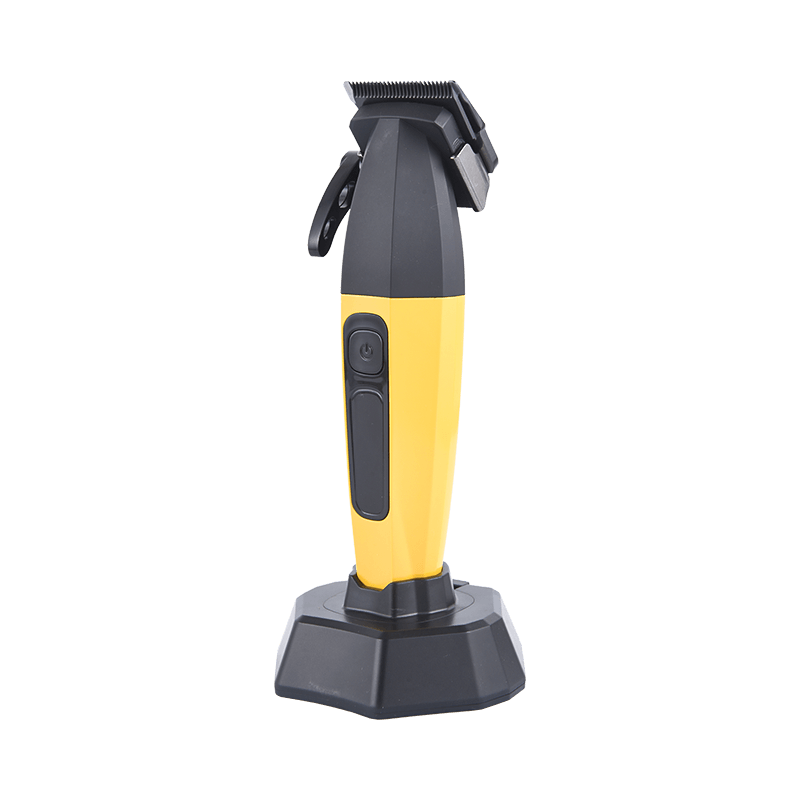 8000 RPM Professional Hair Clipper with Ceramic BladesAn 8000-rpm motor, ceramic black titanium blades, and 180-minute battery support heavy bulk removal and repeatable fading.View Product →
For heavy bulk removal and repeatable fading, a unit built around a constant speed motor is the safer purchase even at a higher unit price, because the cost of a stalled motor is measured in client trust rather than in dollars.
Blade Material: The Specification Most Buyers Skip
Blade steel determines how often a clipper needs sharpening or replacement, and that cost is easy to underestimate. A shop that replaces blades every three months spends far more over two years than the price difference between a mid range and a professional unit.
Two stainless grades dominate the category. 3Cr13 is a martensitic stainless steel commonly hardened to roughly 50 to 55 HRC, which gives it solid edge retention and makes it a standard choice for professional clipper blades and carving knives. 420J2 sits slightly softer at roughly 48 to 53 HRC, offers better corrosion resistance, and appears most often in home clippers and electric shaver heads where sharpness demands are lower.
Coatings are a separate decision from core hardness. A black titanium coating lowers friction at the cutting edge, which reduces heat and drag. Ceramic layers hold an edge longer and run cooler. Neither fixes a soft base steel, and a coating will wear through at the blade tips long before the steel itself fails.
| Blade material | Typical hardness | Edge retention | Corrosion resistance | Notes |
|---|---|---|---|---|
| 3Cr13 stainless steel | 50 to 55 HRC | Good | Moderate | Standard choice for professional clipper and carving blades |
| 420J2 stainless steel | 48 to 53 HRC | Moderate | Good | Common in home clippers and electric shaver heads |
| Black titanium coated stainless | Coating layer, not core hardness | Good surface wear resistance | Good | Lower friction and less heat, but the coating wears at the tips |
| Ceramic black titanium | High surface hardness | Very good | Good | Runs cooler, but chips under impact |
Corded or Cordless: What Actually Matters in a Shop
Cordless is now the default for most barbers, but the specification that matters is not the battery capacity printed on the box. It is the speed the motor can hold as the battery discharges.
A well designed cordless professional clipper maintains consistent blade speed across most of the discharge curve and only slows near the end. A poorly designed one loses speed progressively from the first fade, which is why experienced barbers keep a corded backup within reach.
Practical guidance:
- Ask for runtime at full speed, not runtime at reduced power.
- Check whether the clipper can run while charging. It removes the dead battery problem entirely.
- Confirm the battery is replaceable. A sealed battery turns a repairable tool into waste.
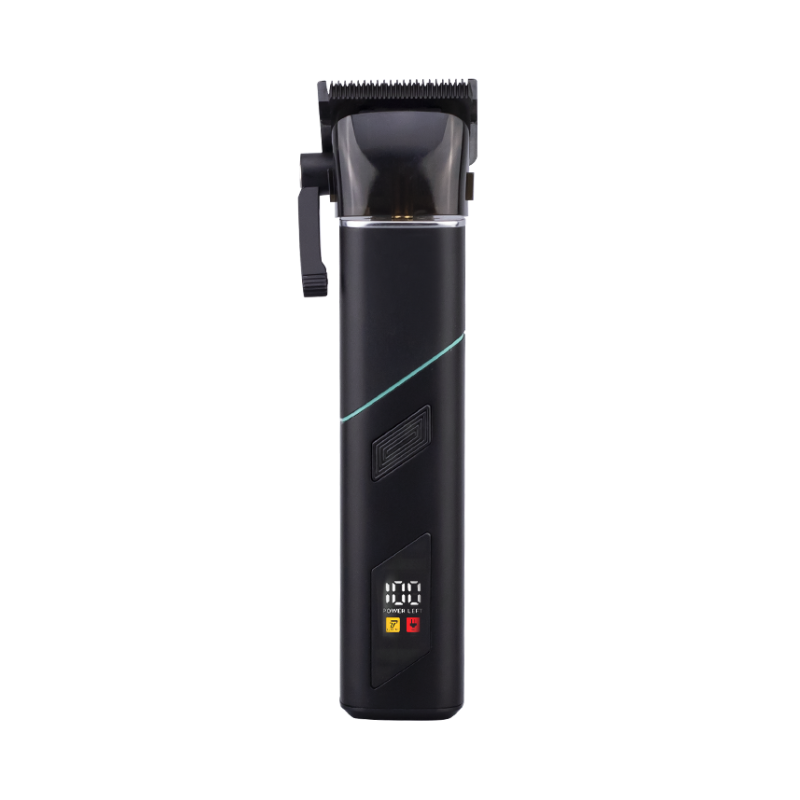
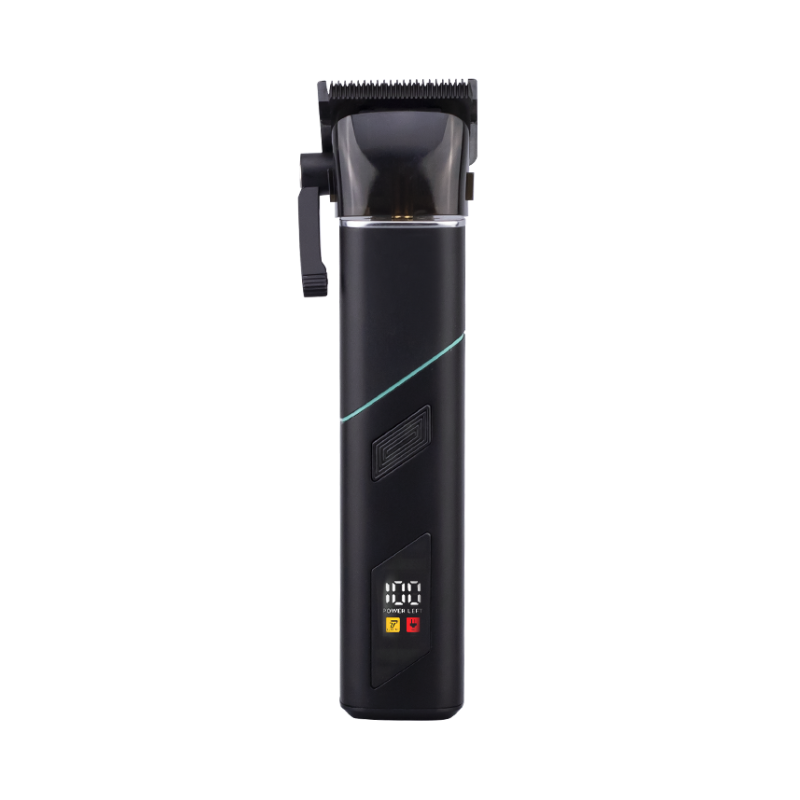 Men's Ceramic Blade Electric Clipper SetA 7000-rpm motor, ceramic R-shaped blade, eight limit combs, and digital display suit daily home trims and professional styling.View Product →
Ergonomics and Heat Under Continuous Use
Most reviews test a clipper for ten minutes. Barbers use it for six to eight hours, and the differences show up late in the day.
Three factors matter most. Weight distribution, because a front heavy clipper forces the wrist to compensate on every pass. Grip diameter, because a housing that is too narrow causes cramping during detailed work. And heat path, because the blade and the motor both generate heat, and the design decides how much of it reaches your hand.
A practical test that costs nothing: run the clipper for fifteen minutes with no load, then check the temperature at the grip point and at the blade base. If the housing is already uncomfortable at fifteen minutes, it will be worse at four hours.
Match the Clipper to the Job
One clipper rarely covers every task in a shop. The categories below reflect how professional catalogs are actually organized, and the specification ranges come from published manufacturer data across the category.
| Clipper class | Typical speed range | Blade material | Best suited to | Main risk |
|---|---|---|---|---|
| Corded shop clipper | 6000 to 8000 RPM, constant | 3Cr13 stainless | Bulk removal, fades, full day use | Cord management and reach |
| Cordless professional clipper | 7000 to 8000 RPM at full charge | Black titanium coated stainless | Mobile cutting, finishing, detail work | Speed loss as the battery discharges |
| Carving and detail trimmer | 6000 to 7000 RPM with a tighter blade gap | Ceramic black titanium | Outlines, line work, hair tattoos | Blade heat during long detail sessions |
| Home and personal clipper | 5000 to 6500 RPM | 420J2 stainless | Self haircuts, touch ups, beard work | Stalling in thick or wet hair |
Carving and line work deserve separate attention. A dedicated carving clipper uses a tighter blade gap and a narrower cutting head, which allows outlines, hair tattoos, and detailed transitions that a standard clipper cannot reach. If you want to understand the mechanics before buying, this explanation of how a carving hair clipper works covers the blade geometry in plain terms.
Barbershop carving tools are usually sold with a fixed blade and a moving blade that can be zero gapped, so confirm the adjustment is repeatable rather than a one time factory setting.
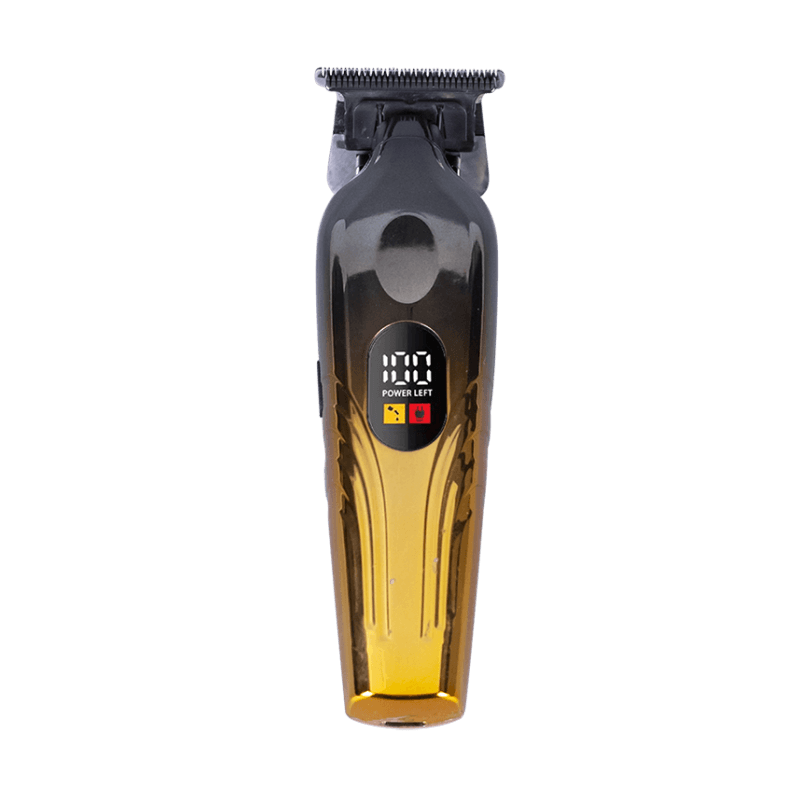 A004SD LED Barbershop Carving Hair ClipperThe A004SD pairs a 0.1mm ceramic cutter and 6800-rpm motor with a 180-minute battery for detailed barbershop engraving and continuous work.View Product →
Pre-Purchase Checklist
- Confirm loaded motor speed and torque, not only the rated no load figure.
- Verify blade steel grade and coating, and request the hardness range in HRC.
- Check blade gap adjustment and whether spare blades are stocked locally.
- Compare housing weight and grip diameter against your own hand, not a photo.
- Confirm runtime at full speed, battery replaceability, and charge while running.
- Ask about warranty terms on the motor separately from the blade assembly.
- Request a sample unit before committing to volume, and test it on real clients.
What Distributors and Shop Owners Should Check Before Ordering
For buyers ordering in volume, the risk profile shifts from performance to consistency. Two clippers from the same model line can differ in blade hardness, motor speed, or housing fit if the production process is not controlled tightly.
Ask about the production chain rather than the finished unit alone. A supplier running its own injection molding, assembly, and packaging lines has tighter control over tolerances than one assembling from mixed batches of parts. Our own production lines follow that model, with automated injection molding, standardized assembly, and a semi finished goods area feeding a dedicated product warehouse.
Three questions worth asking any supplier:
- What is the acceptable speed tolerance between units within a single order?
- How is blade hardness verified, per batch or per shipment?
- What is the replacement policy for units that fail within the first ninety days?
Choosing the best barber clipper is less about finding one universal winner and more about matching three specifications to the way you cut. Motor speed under load decides whether fades stay clean. Blade steel and coating decide your long term cost per chair. Ergonomics and heat decide whether the tool is still pleasant to use at the end of a Saturday.
Start with those three, verify them on a sample unit with real clients, and the brand question becomes far less interesting.
- ADD: Room 301, Building 5, Xiaocao'e (Hangzhou Bay) Electromechanical Industrial Park, Yuyao City
- Tel:+86 13805803689 / +86 13805803356
- Email: 269354157@qq.com
Copyright Ningbo Jiaweidi Electric Appliance Co., Ltd. All Rights Reserved.
OEM/ODM personal electric hair push manufacturer
Custom Electric Push Shear Carving Push Factory
