 English
 Español
 عربى
 Deutsch


Cordless Barber Clippers: What Buyers Check Before Placing a Bulk Order
 2026.10.16
 Industry News
Content
- 1 The Failure Points That Show Up After Six Months
- 2 Motor Type Sets the Ceiling for Everything Else
- 3 Reading the Speed Number Correctly
- 4 Battery, Runtime and Duty Cycle
- 5 Blade Steel, Coatings and What They Cost at the Chair
- 6 Carving and Detailing Need a Different Machine
- 7 A Bench Test to Run Before Approving a Bulk Order
- 8 What a Distributor Should Confirm With the Manufacturer
A four chair barber shop rarely retires a clipper because the motor stopped turning. It retires the tool because the battery quits at minute ninety, the blade gets too hot to rest against a neck, or the taper lever stops holding a zero gap after eight months of daily work. Cordless barber clippers are sold on the number printed largest on the box, the no load speed, and they fail on the numbers nobody prints: runtime under load, blade temperature, and the torque that is left once the blade meets thick hair.
The decision comes down to four things: motor type, battery design, blade steel, and balance in the hand. Color, packaging and the shape of the charging stand are presentation. What follows explains what each choice costs in practice, how to read a specification sheet without being misled, and what to check before a bulk order leaves the factory.
The Failure Points That Show Up After Six Months
Complaints and returns on professional clippers cluster around five causes, and none of them appear on a specification sheet.
- Runtime shrink. A quoted runtime usually comes from a bench test with no hair load. In a chair, with the blade meeting dense or damp hair, a tool that claims three hours often delivers closer to one and a half.
- Blade heat. Friction at the cutting edge climbs with speed. Once the blade face passes roughly 60 degrees Celsius, clients flinch and barbers start resting the tool on a towel between cuts.
- Lever drift. The taper lever is the most handled part on the machine. Cheap pivots develop play, and a cutter that no longer closes to zero gap cannot produce a clean fade line.
- Battery fade. Cell datasheets from major lithium ion suppliers typically rate 300 to 500 full charge cycles to 80 percent of rated capacity. A shop that charges twice a day reaches that point inside a year.
- Balance. Above roughly 280 grams, control at the back of the head suffers, and fatigue shows up in the last hour of a shift rather than the first.
Notice that only one of these five is about raw power. The rest are about how the tool behaves when it is hot, tired and used forty times a day.
Motor Type Sets the Ceiling for Everything Else
Motor architecture determines how much speed survives contact with hair, how much heat stays in the housing, and how long the tool lasts. Published specifications across the category fall into three recognizable groups.
| Motor type | Typical no load speed | Behaviour under load | Expected service life | Best fit |
|---|---|---|---|---|
| Magnetic vibration motor | 6000 to 7000 rpm | Speed falls sharply in thick hair | Limited by brush wear, often not serviceable | Entry level and home tools |
| Brushed rotary motor | 5000 to 7000 rpm | Moderate drop, housing warms noticeably | Several hundred hours of cutting | Mid range professional tools |
| Brushless rotary motor | 6000 to 8000 rpm | Holds speed, torque stays flat | Over a thousand hours in published ratings | Busy shops and cordless models |
A brushless motor is not automatically the right answer for every buyer. It costs more, and on a low volume home tool the extra service life is never used. Where it pays for itself is in a shop running four or more cuts per hour, because consistent torque is what keeps a fade line even when the blade is warm.
Reading the Speed Number Correctly
A speed figure quoted on a box is almost always a no load figure, measured with the blade running free. Load it with a full head of wet hair and a machine advertised at 8000 rpm may settle around 5000 to 6000 rpm. The gap between the two numbers is the honest measure of a clipper, and it is rarely printed anywhere.
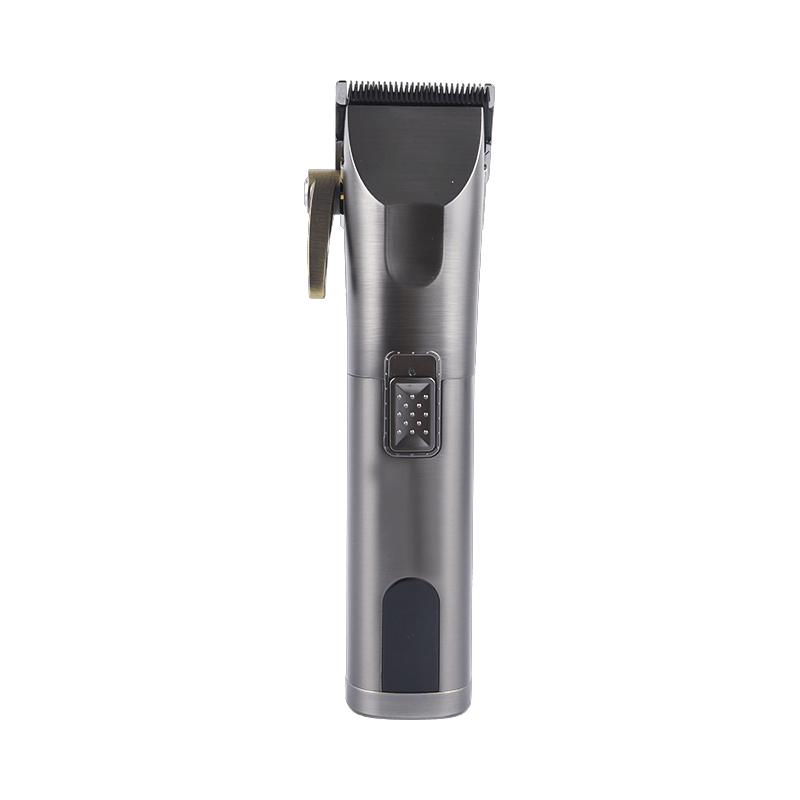
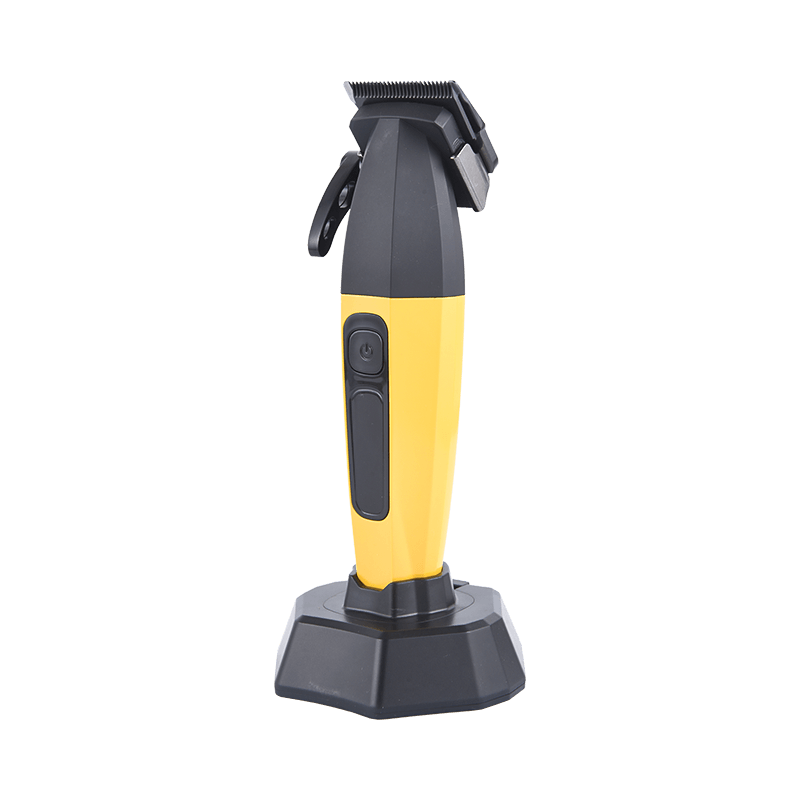 8000 RPM Professional Hair Clipper with Ceramic Black Titanium Blade SystemGiven the loaded-speed discussion, this clipper lists an 8000 rpm motor, ceramic black titanium blades, digital display, and 2500mAh battery.View Product →
When comparing two machines, ask the supplier for the speed at a defined load, or better, ask for a cutting test on a standard hair swatch. A supplier who can answer that question is usually a supplier who built the tool around the motor rather than around the carton.
Battery, Runtime and Duty Cycle
Cell capacity is quoted in milliamp hours, but capacity alone tells you very little. Voltage matters more for torque. A two cell pack at 7.4 volts drives a rotary motor with far more authority than a single cell at 3.7 volts, even when the milliamp hour ratings match. Charge time matters in a working shop as well: a tool that needs four hours to refill is a tool that sits idle through the afternoon.
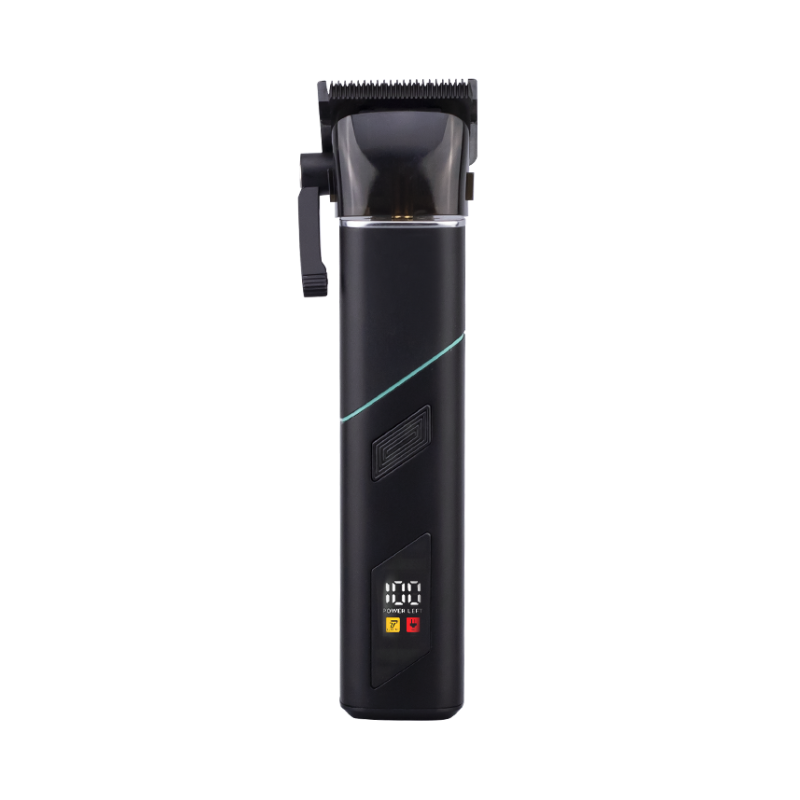 Men's Ceramic Blade Electric Clipper Set with Type-C ChargingA 7000 rpm clipper set with ceramic blade, eight limit combs, smart display, and 2500mAh Type-C battery for home haircuts.View Product →
For buyers, the practical question is whether the pack is replaceable. A cordless clipper with a sealed battery has a service life measured in charge cycles, while one with a swap in pack can stay in rotation for years. Spare packs also change the purchasing math, because two packs often cost less than a third machine.
Blade Steel, Coatings and What They Cost at the Chair
Blade geometry decides how the cut feels, but steel decides how long it feels that way. Steel datasheets place 3Cr13 and comparable martensitic stainless grades in the 50 to 56 Rockwell C range, which holds an edge well and resists deformation. The 420J2 grade is softer and trades some edge retention for corrosion resistance, which suits damp environments and infrequent use.
Ceramic cutters run cooler because the material conducts less heat into the skin, but thin ceramic sections chip if they are dropped. Black titanium and similar coatings lower friction at the cutting edge and resist rust, and the coating wears first at the very tips, so a coated blade that has been resharpened aggressively is no longer the blade that was specified. For shop use, the pairing that holds up best is a hard martensitic steel with a low friction coating, plus a spare cutter on the shelf.
Carving and Detailing Need a Different Machine
The main clipper does bulk work; the detail work is done with a carving tool. A barbershop carving clipper usually runs a narrower blade, often around 30 to 40 millimetres, with a lever that adjusts to a true zero gap for line work and hair tattoos. Trying to do that job with a wide bulk blade and a worn lever is the single most common reason a fade line looks unfinished.
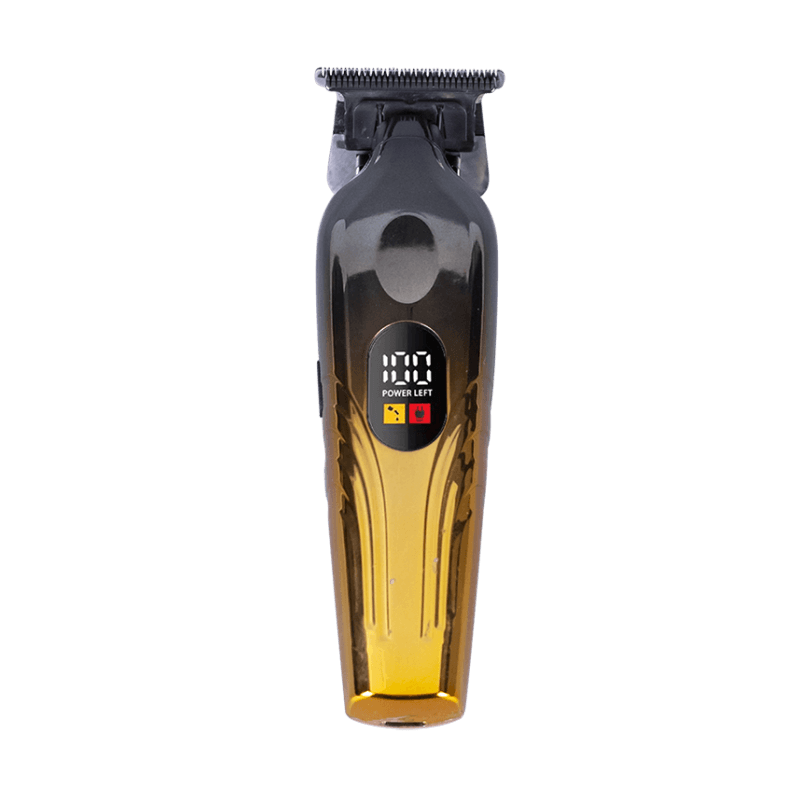 LED Multi-Functional Hair Clipper for Carving and Detail WorkA 6800 rpm carving clipper with ceramic cutter, 0.1mm tooth pitch, LED display, and 1200mAh battery for detailed line work.View Product →
Home users rarely need the same tool. A home carving clipper with similar blade geometry but a simpler housing and lighter duty cycle covers beard lines, necklines and touch ups without paying for shop grade durability.
A Bench Test to Run Before Approving a Bulk Order
Samples should be tested the way the end user will treat them, not the way a catalog photo suggests. A short, repeatable routine will separate a good batch from a risky one.
- Run the clipper continuously for 30 minutes on a full charge and record the runtime. Compare it with the quoted figure.
- Measure blade temperature immediately after that run with an infrared thermometer. Anything that becomes uncomfortable to hold against the inside of a wrist is a heat problem.
- Cut a standard swatch of dense hair and watch whether the note of the motor drops. A clear pitch drop means the tool is losing speed under load.
- Work the taper lever fifty times, then check whether it still returns to zero gap without play.
- Weigh the tool with the battery installed. Over 280 grams is a fatigue risk for all day use.
- Confirm the charger plug, voltage and documentation match the destination market, and ask for the battery test report for that production batch.
A manufacturer that controls its own processes can usually answer these questions with data rather than adjectives. Jiaweidi Electric, for example, runs its own automated injection molding, standardized assembly and automated packaging lines, which is the kind of vertical control that makes batch consistency testable rather than hopeful. The factory page describes those production stages in more detail.
What a Distributor Should Confirm With the Manufacturer
Once the product passes the bench test, the remaining risks are commercial rather than technical. These are the points worth putting in writing before a purchase order is issued.
- Minimum order quantity per model, and whether it can be mixed across colors or blade variants.
- Availability of spare cutting blades, taper levers and replacement battery packs as separate line items.
- Warranty length, and whether it covers the battery and the motor separately, since they fail at different rates.
- Packaging and private label terms, including artwork approval and carton drop test results.
- Lead time for a repeat order, not only for the first order.
- Certification documents required by the destination market, supplied per batch rather than per catalog.
It also helps to know who you are buying from. Jiaweidi Electric was established in 2017 and describes itself as a manufacturer of professional hair clippers and carving clippers serving wholesalers and agents. According to the company profile published on its own site, a new factory is planned with a reported 50 million RMB budget and an expected annual output value of 80 million RMB, adding injection molding, assembly, semi finished goods and warehouse capacity. Buyers who need volume, replaceable parts and consistent batches can review the company background before shortlisting suppliers.
Cordless barber clippers are not complicated machines, but they are easy to buy badly. Judge the motor by its behaviour under load, the battery by whether it can be replaced, the blade by its steel and coating, and the supplier by whether the specification sheet survives a bench test. Those four checks will tell you more in one afternoon than any catalog will tell you in a season.
- ADD: Room 301, Building 5, Xiaocao'e (Hangzhou Bay) Electromechanical Industrial Park, Yuyao City
- Tel:+86 13805803689 / +86 13805803356
- Email: 269354157@qq.com
Copyright Ningbo Jiaweidi Electric Appliance Co., Ltd. All Rights Reserved.
OEM/ODM personal electric hair push manufacturer
Custom Electric Push Shear Carving Push Factory
