 English
 Español
 عربى
 Deutsch


How to Choose the Best Clippers for Barbers: Blades, Motors, Duty Cycle
 2026.11.06
 Industry News
Content
A clipper that pulls instead of cutting costs more than its price tag. Three clients into a Saturday lineup, the blade is hot, the motor sags on thick hair, and the fade you normally finish in four minutes takes nine. That one afternoon explains the question barbers keep asking: what actually separates a working tool from a shelf decoration?
The short answer is that the best clippers for barbers are the ones matched to your cutting mix on three points. Blade steel and tooth geometry decide how the tool enters the hair. Motor torque and duty cycle decide how long it holds that performance. Serviceability, meaning blades and switches you can genuinely reorder two years later, decides your real cost per chair. Sticker price comes last.
Blade Steel and Tooth Geometry Come First
Two clippers can share the same body shape and cut nothing alike, because the blade set does most of the work. In professional catalogues you will usually see two stainless grades. 3Cr13, defined under the GB/T 1220 stainless steel standard, carries roughly 0.26 to 0.35 percent carbon and 12 to 14 percent chromium, reaching about HRC 50 to 55 after heat treatment. 420J2, listed in the JIS G4303 standard, sits in a similar range and is common on blades described as Japanese spec. Harder steel holds an edge longer; slightly softer steel resists chipping when it meets a head that has not been washed in three days. Both matter, and neither is visible from the outside.
Surface treatments are a separate layer. A black titanium finish is a thin physical vapour deposition coating applied over the steel, usually a few microns thick. It lowers friction, adds corrosion resistance and keeps the blade looking clean, but it does not upgrade the base steel. Ceramic moving blades run cooler because ceramic conducts less heat, at the cost of brittleness if the blade is dropped.
Tooth count shapes the cut as much as the steel. Deep, widely spaced teeth feed bulk hair quickly and suit debulking and first passes. Fine teeth with shallow gullets blend better and leave a cleaner line at short lengths. Check whether the taper lever moves the cutting length through a usable band, and whether the blade can be zero gapped for line work.
Motor Type, Speed and Duty Cycle
Three motor families dominate. Magnetic or vibrating armature motors spin fast and stay light but lose torque in thick hair. Pivot motors deliver more cutting force and run warmer. Rotary motors hold constant torque and run quieter, with extra weight as the trade-off. A spec sheet that quotes only speed tells you half the story. A high speed class such as the 8000 RPM professional clipper in the Jiaweidi barber line refers to no-load speed; the question to ask is whether the motor holds that speed when it enters a dense crown.
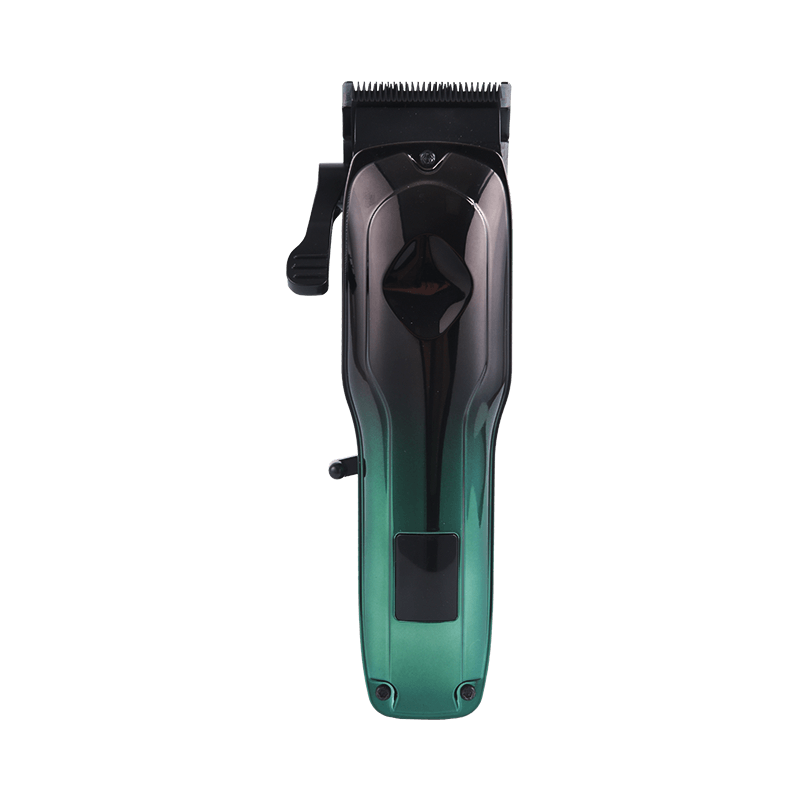
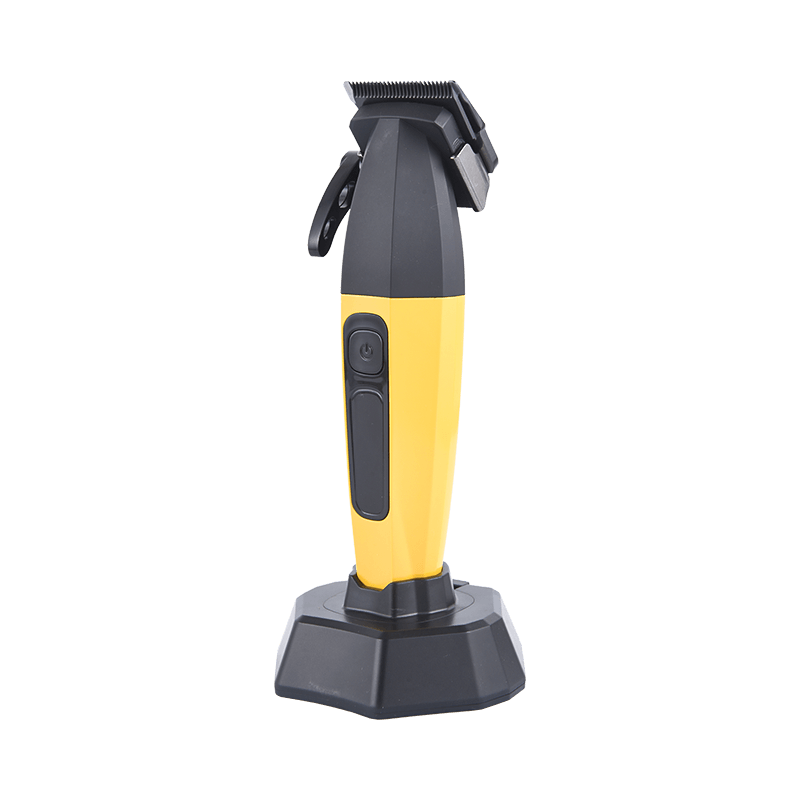 8000 RPM Professional Hair Clipper with Ceramic Titanium BladeFor dense hair, the 8000 rpm motor, cool-running ceramic titanium blade, 180-minute battery, and digital display support busy barbershop use.View Product →
Duty cycle is the number most buyers ignore and most barbers feel by lunchtime. Consumer clippers often quote a limited continuous run time with a cool-down period, while professional corded units are built for a full working day. Ask the supplier directly about thermal cutoff behaviour, heat rise at the blade after twenty minutes of continuous use, and whether the housing has any ventilation path. Vibration matters too: a tool that rattles for eight hours a day shows up as wrist and forearm fatigue long before the motor fails.
Corded or Cordless: Weigh the Real Cost
Cordless has become the default for fades and detail, and for good reason. No cord drag, faster movement around the ear, easier work at the nape. The catch is battery ageing. A lithium ion pack that gives 90 minutes when new may give noticeably less after two years of daily charging, so check whether the pack is replaceable or built into a sealed housing. Weight and balance matter as well; a heavy battery at the base changes how the tool feels in a reverse hold.
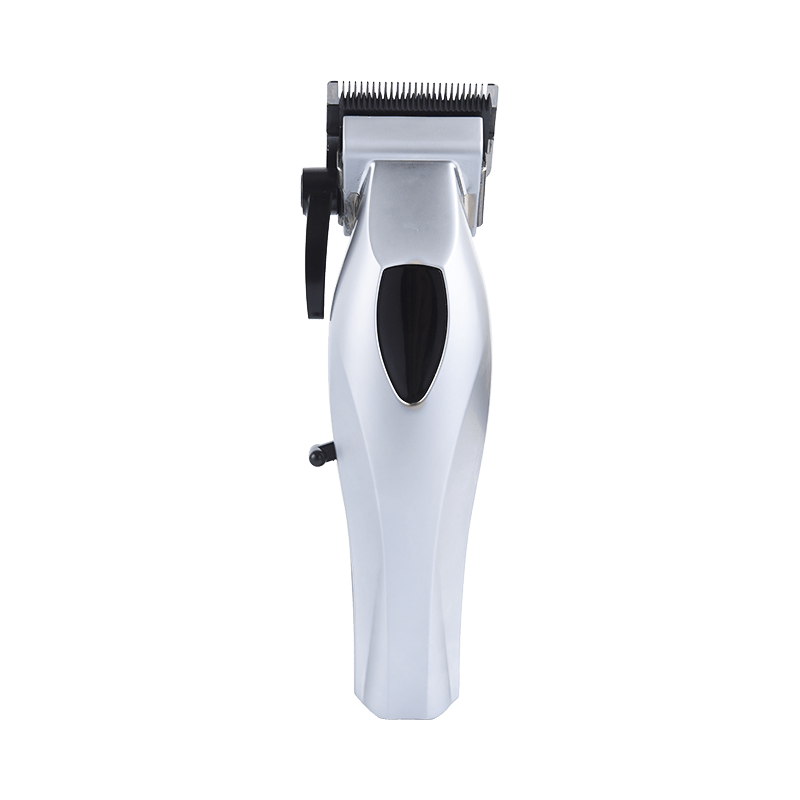
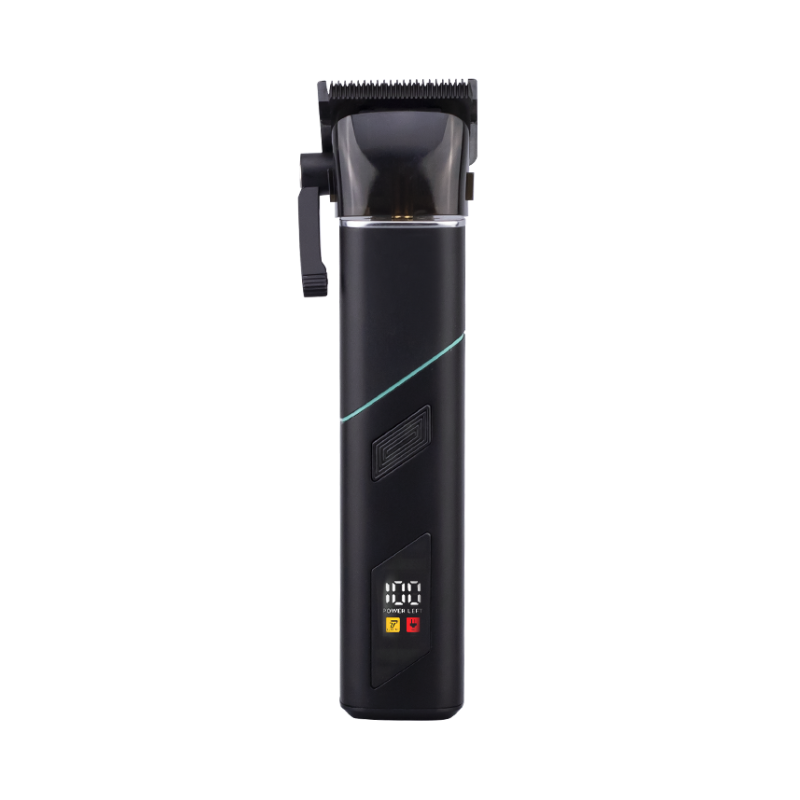 Men's Ceramic Blade Electric Clipper Set with Digital DisplayA 7000 rpm cordless clipper with ceramic R-shaped blade, eight limit combs, Type-C charging, and 2500mAh battery for home haircuts and detailed grooming.View Product →
Corded units still earn their place for bulk removal on thick hair, where constant torque and no runtime limit beat convenience. Many shops settle on one corded workhorse plus one or two cordless tools for detail, and treat the cordless units as consumables with a defined replacement cycle.
Match the Tool to the Work
A single clipper cannot cover a full service menu well. The standard kit separates into three roles. The main clipper handles bulk, fade foundations and longer lengths. A trimmer with a fine tooth blade and a tighter cutting arc handles edges and necklines. An engraver or carving clipper, with a narrower blade and exposed teeth, handles outlines, beard definition and hair designs. If you want the mechanical detail, this guide explains how a carving clipper works at the blade and stroke level.
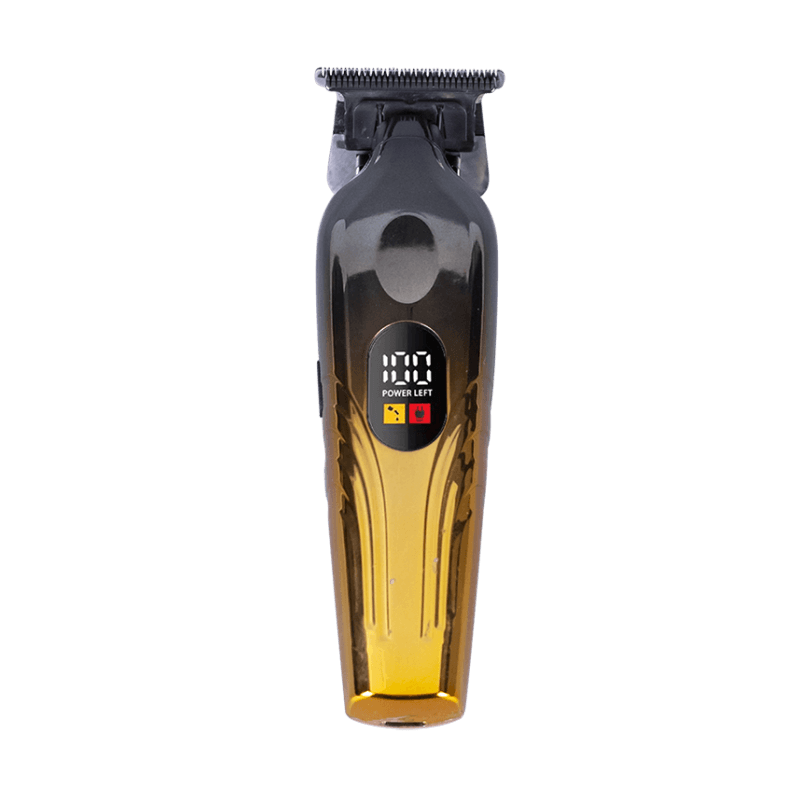 LED Multi-Functional Carving Hair Clipper for Barbershop DetailA 6800 rpm ceramic-blade carving clipper with LED display, 180-minute battery, and rounded cutter head for fine outlines and sensitive-skin grooming.View Product →
Buy the roles, not the badge. A shop doing mostly short fades needs a clipper that blends cleanly at low lengths and a trimmer that zero gaps reliably. A shop doing textured crops and scissor work needs a tool with enough torque to push through wet or product-heavy hair without stalling.
A Shop Floor Checklist Before You Buy
Use the same short list every time you evaluate a new model, whether you are testing one sample or negotiating a wholesale order. The targets below reflect professional barber use rather than home trimming.
| What to check | Workable target | Effect on the floor |
|---|---|---|
| Blade steel and hardness | 3Cr13 or 420J2, about HRC 50 to 55 | Edge holds through a full day of cutting |
| Speed under load | Motor holds RPM in thick hair | Fewer pulls, less client discomfort |
| Duty cycle | Rated for continuous shop use | No mid shift cool-down stops |
| Cutting range | Lever covers bulk down to near zero | Fewer tool changes per client |
| Vibration and noise | Comfortable over an eight hour shift | Less hand and wrist fatigue |
| Spare parts | Blades, switches and batteries reorderable | Lower cost per year of service |
What to Ask a Supplier Before Buying in Volume
Samples tell you how a tool cuts for a week. A supplier conversation tells you how it will cut in year three. Start with written confirmation of blade steel grade and heat treatment, then ask for the reorder path on blades, levers and switches. If those parts disappear from the catalogue, the clipper becomes disposable no matter how well it performed on day one.
For volume orders, request the inspection standard used before packing, the sampling plan, and any test report covering motor endurance and blade hardness. Confirm minimum order quantities, packaging options, and whether spare blades can ship in the same carton. Jiaweidi runs automated injection moulding, automated packaging and standardised assembly lines, and the company has budgeted 50 million yuan for a new plant covering moulding, assembly, semi finished goods and warehousing, with a projected annual output value of 80 million yuan, according to its published company profile. You can review that production floor and the process flow before committing to a first order.
Finally, ask about the failure rate the supplier is willing to stand behind and how replacements are handled. A clear answer on after-sales handling is a better signal than a longer warranty printed on a box.
Choosing clippers is a purchasing decision dressed as a preference. Decide the blade steel grade, the torque you need for your client mix, and the duty cycle your schedule demands, then check whether the parts and the supplier will still be there in three years. A barber who buys on those three points replaces tools on a planned schedule instead of an emergency one, and the difference shows up in both the chair time and the book.
- ADD: Room 301, Building 5, Xiaocao'e (Hangzhou Bay) Electromechanical Industrial Park, Yuyao City
- Tel:+86 13805803689 / +86 13805803356
- Email: 269354157@qq.com
Copyright Ningbo Jiaweidi Electric Appliance Co., Ltd. All Rights Reserved.
OEM/ODM personal electric hair push manufacturer
Custom Electric Push Shear Carving Push Factory
