 English
 Español
 عربى
 Deutsch


The Best Clippers for Cutting Your Own Hair: Blade, Motor and Guard Guide
 2026.11.05
 Industry News
Content
- 1 What Actually Decides Whether a Self-Cut Works
- 2 Blade Material and Edge Geometry Come First
- 3 Motor Speed and Torque: Where Cheap Clippers Fail Mid-Cut
- 4 Corded, Cordless, or Both
- 5 Guards, Numbering and Cutting Length
- 6 Detailing: The Part Most Home Cuts Get Wrong
- 7 A Practical Buying Checklist
- 8 If You Are Buying for a Shop or a Store Shelf
Almost every failed home haircut fails in the same two places: the back of the head and the ridge just above the ear. You cannot see the blade angle there, so you cut by feel, the motor slows, and the soft blend you intended turns into a visible step.
The short answer: the best clipper for cutting your own hair is a machine with a rigid stainless or titanium-coated blade, enough torque to hold speed through thick or slightly damp hair, a guard range from about 1.5 mm to 25 mm, a taper lever you can move with one thumb, and a body light enough to hold upside down behind your head for twenty minutes. Price is a weak predictor of any of that. The rest of this guide explains how to check each point before you buy, and where the spec sheet tends to lie.
What Actually Decides Whether a Self-Cut Works
When a clipper is used on someone else, the operator can compensate: change angle, slow down, go over the same spot twice. Cutting your own hair removes that feedback loop, so the tool has to be more forgiving, not more powerful. These are the specifications that matter, in the order they tend to ruin a haircut.
| Specification | What to look for | Why it matters in a self-cut |
|---|---|---|
| Blade material | 3Cr13 or 420J2 stainless steel, with black titanium or ceramic coating as an option | Holds an edge across repeated passes and runs cooler against the scalp |
| Motor speed | Rated RPM clearly stated, with a high-torque motor rather than a high-speed one alone | Slow or weak motors bog down in dense hair and leave track marks |
| Guard range | At least a #1 to #8 set, with 1 mm to 3 mm steps between sizes | Small increments are the only way to blend without visible lines |
| Taper lever | Thumb lever with visible detents or clicks | Lets you fade a neckline without swapping guards mid-cut |
| Blade width | Around 40 mm to 45 mm for bulk removal, 30 mm or less for detail | Wide blades are faster but block your view at the hairline |
| Weight and grip | Light body with a textured or rubberised shell | You hold the tool inverted and behind your head; heavy clippers drift |
| Runtime | Roughly 90 minutes cordless, or usable while charging | Battery fade mid-pass changes cutting speed and ruins a blend |
Blade Material and Edge Geometry Come First
The cutting blade is two rows of teeth oscillating against each other, and the quality of that pair decides everything downstream. Two steels dominate the category. 3Cr13 stainless, with roughly 0.3 percent carbon and 13 percent chromium, is the common choice for clipper blades because it balances hardness with corrosion resistance. 420J2 stainless is softer and easier to sharpen, which makes it a frequent pick for shaver foils and lighter trimming heads.
Coating is the second layer of the decision. A black titanium coating reduces friction at the tooth edge, which keeps the blade cooler during long passes and reduces the pull you feel when the clipper starts to drag. Ceramic moving blades are chosen for the same reason: they conduct less heat into the skin. Across the Jiaweidi catalogue, blade descriptions follow exactly this pattern, listing 3Cr13 stainless, 420J2 stainless, black titanium, ceramic and ceramic black titanium combinations as separate options (jiaweidi.com product pages).
Geometry matters as much as metallurgy. A blade with a fine gap cuts closer but is less forgiving on loose skin at the neck; a wider gap is safer for beginners but leaves a longer shadow. If you plan to cut your own hair regularly, a mid-gap blade plus a taper lever covers more situations than an ultra-close blade that only works on a flat, taut surface.
Motor Speed and Torque: Where Cheap Clippers Fail Mid-Cut
A clipper that stalls does not simply cut slower. It stops, the blade temperature drops, and when it restarts it bites a slightly different line. That single behaviour explains most of the ridges people find at the back of their head the morning after a self-cut.
Look for a stated RPM figure and treat it as a floor, not a headline. In the professional segment, 8,000 RPM is a common reference point for a full-size clipper intended for dense or thick hair (jiaweidi.com, 8000 RPM professional hair clipper listing). Below roughly 5,000 RPM, a cordless machine with a dulling blade will struggle on hair that is more than a few centimetres long, and you will find yourself making four passes where one should have worked.
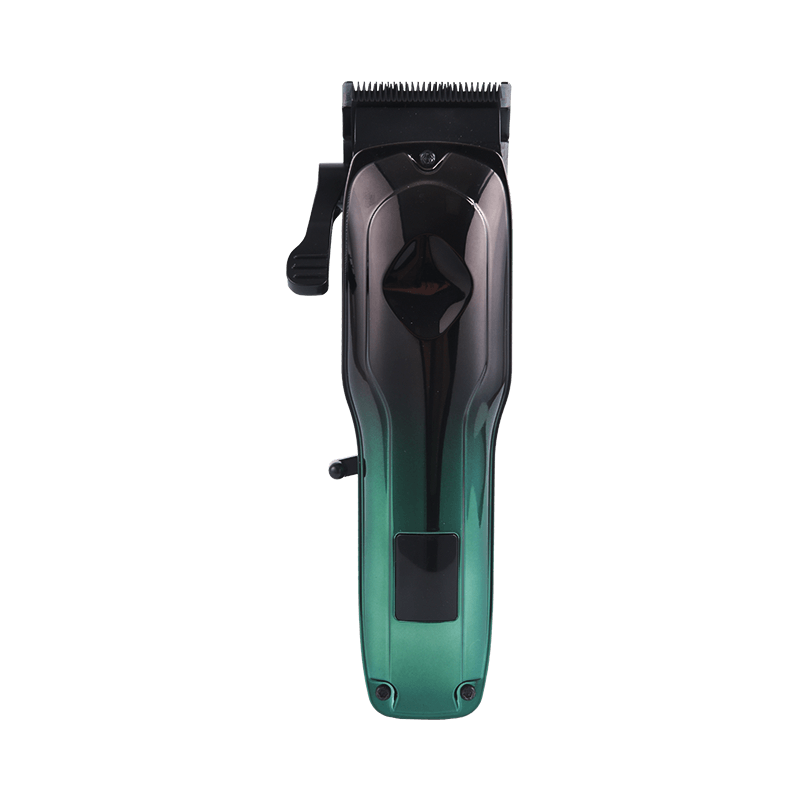
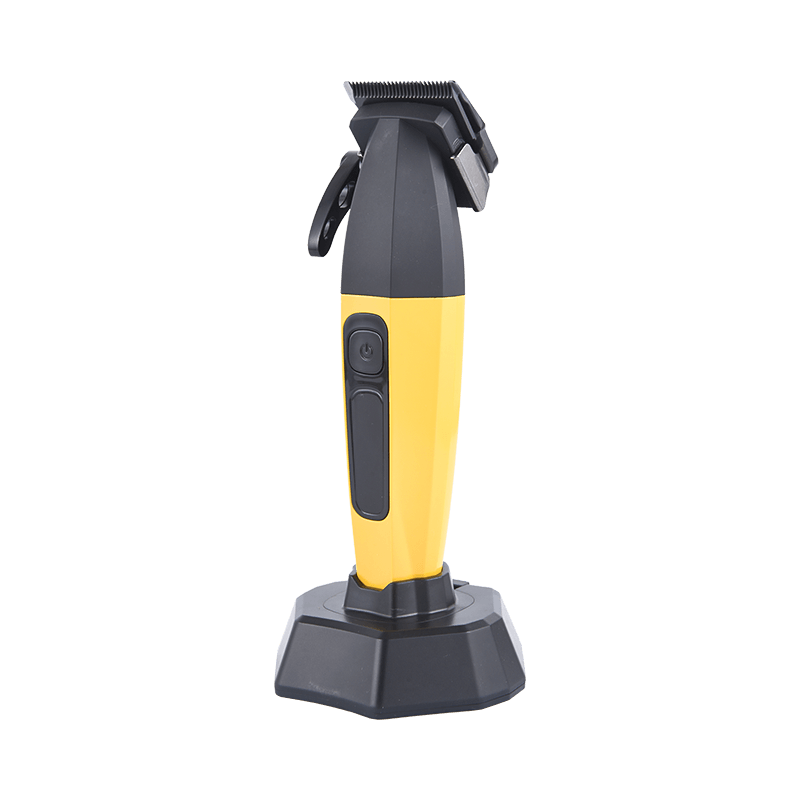 8000 RPM Professional Cordless Hair ClipperAn 8000 RPM cordless clipper with a 2500 mAh battery, up to 180 minutes, and ceramic titanium blades for thick, dense, or wet hair.View Product →
One more point that spec sheets rarely explain: torque and speed are not the same thing. A high-RPM motor with a light armature spins fast in air and dies in hair. Ask, or test, how the machine behaves when you press it into a thick section at the crown.
Corded, Cordless, or Both
Cutting your own hair involves a lot of repositioning. You will hold the clipper upside down, switch hands, and step back to check the mirror. A cord attached to the back of the unit snags on your arm at exactly the wrong moment, which is why cordless models have become the default recommendation for self-cutting.
The trade-off is battery behaviour. A lithium cell losing its last twenty percent of charge does not fail loudly, it just spins the blade a little slower, and that is enough to change the cut. Choose a model that runs from the cord while charging, or one with a runtime comfortably longer than the twenty to forty minutes a full self-cut takes. Weight distribution matters too: battery-at-the-base designs feel balanced when held horizontally and nose-heavy when held overhead.
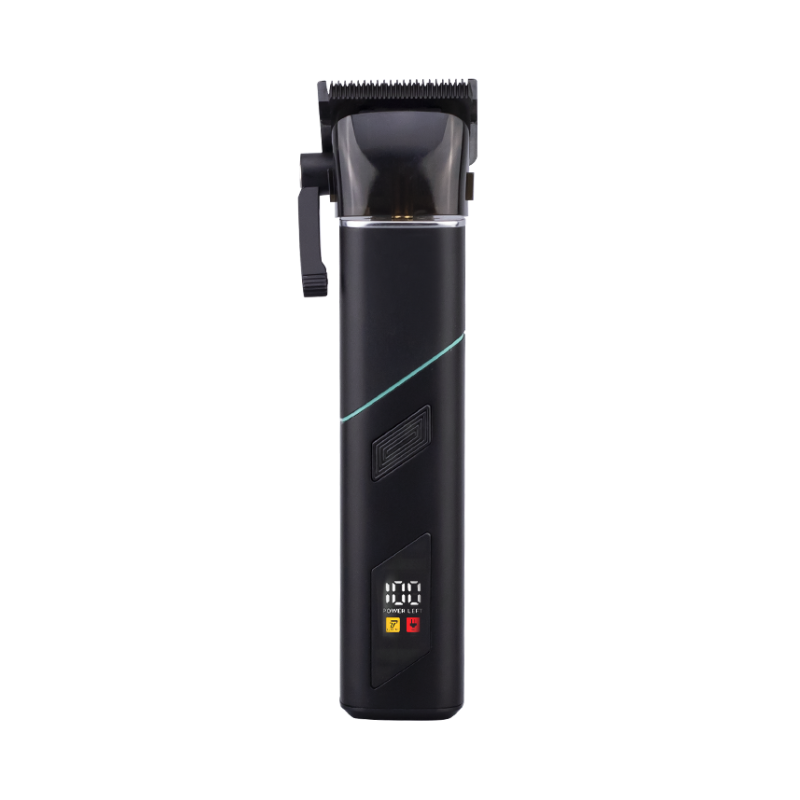 Men's Ceramic Blade Electric Clipper SetA 7000 RPM clipper set with eight limit combs, 2500 mAh Type-C battery, use-while-charging, and a 0.1 mm fixed blade for home haircuts and detailing.View Product →
Guards, Numbering and Cutting Length
Guard numbers are the most misread part of the whole category. A #1 does not mean one centimetre. The conventional system maps guard numbers to millimetre lengths, and the millimetre equivalents below follow the standard conversion charts used across the industry.
- #1 guard, about 3 mm, the shortest common setting for sides and a tight neckline
- #2 guard, about 6 mm, a short but soft crew-cut length
- #3 guard, about 10 mm, the usual starting point for a scissor-like top
- #4 guard, about 13 mm, a comfortable everyday length for most adults
- #6 guard, about 19 mm, medium length that still lies flat
- #8 guard, about 25 mm, the practical ceiling before the clipper starts to skip
Buy a set that covers the range in small steps, because blending is a matter of moving one guard size at a time. The taper lever does the fine work between sizes and is the single most useful feature for a self-cut. For technique, a step-by-step walkthrough of guard direction, sectioning and mirror placement is covered in this guide to cutting hair with clippers.
Detailing: The Part Most Home Cuts Get Wrong
The bulk pass takes ten minutes. The neckline, sideburns and the curve around the ear take longer, and they are what people notice. A full-size clipper with a 45 mm blade physically cannot see into those corners, which is why a second, narrower tool is worth considering even for home use.
A line engraving or detail clipper with a short blade and a fine gap lets you outline the hairline before you blend down to it. Work in that order: define the edge first, then fade toward it, rather than chasing a line you already cut too high. Hair grows around 15 cm a year on average, according to the American Academy of Dermatology, so a mistake at the hairline has a visible life of roughly four to six weeks.
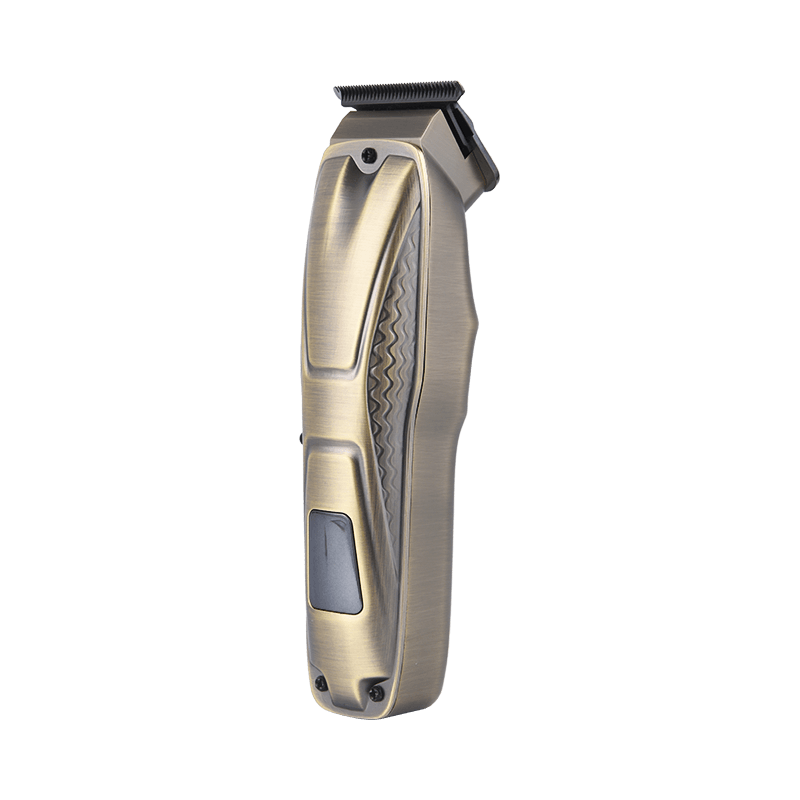 Line Carving Detailing Hair ClipperA 6800 RPM detailing clipper with a ceramic titanium cutter head, Type-C charging, and digital display for hairline and scalp line carving.View Product →
A Practical Buying Checklist
Before you commit, run through these points in order. Any single failure here is enough to send the clipper back.
- Steel type and coating are named, not described as "stainless steel blade" with no grade
- RPM or motor class is stated in the specification table, not only in marketing copy
- Guard set covers at least 3 mm to 25 mm with small steps between sizes
- Taper lever moves with one thumb and stays where you set it
- Runtime exceeds your expected cutting time, or the unit runs while charging
- Blade is removable for cleaning and replacement, with spare blades available
- Weight and grip work with the tool held overhead, not just at waist height
The full range described in this guide, including professional, cordless, home and detail models, is listed in the clipper product catalogue.
If You Are Buying for a Shop or a Store Shelf
Buyers evaluating clippers at volume look at the same specifications, plus one more: whether the manufacturer can hold tolerances across batches. Jiaweidi, based in Ningbo and founded in 2017, builds personal care clippers and carving clippers for wholesalers and distributors, running automated injection moulding, automated packaging and standardised assembly lines. The company reports a 50 million RMB budget for a new plant covering moulding, assembly, semi-finished goods and warehousing, with projected annual output value of 80 million RMB once complete (jiaweidi.com company profile).
For a distributor, that structure matters more than any single model: consistent blade geometry, repeatable guard fit and a service path when a batch does not match the sample. Ask for the blade grade in writing, confirm the guard tolerances, and request a unit you can cut with rather than only look at.
- ADD: Room 301, Building 5, Xiaocao'e (Hangzhou Bay) Electromechanical Industrial Park, Yuyao City
- Tel:+86 13805803689 / +86 13805803356
- Email: 269354157@qq.com
Copyright Ningbo Jiaweidi Electric Appliance Co., Ltd. All Rights Reserved.
OEM/ODM personal electric hair push manufacturer
Custom Electric Push Shear Carving Push Factory
